Showing posts with label Shakespeare. Show all posts

Thursday, February 28, 2013

Zero to Hero

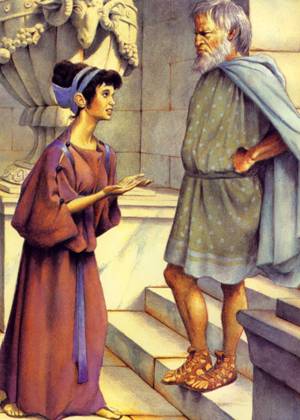
Robin Hood, Milo Winter
Why are heroes so stupid?

I mean, really. Think about it. Nearly every iconic hero has at least one moment of total idiocy. "Wily" Odysseus just has to give all his contact info to the god whose son he just blinded. Beowulf deliberately tackles a dragon single-handed when he's way past his prime. Arthur ignores Merlin's very specific warning about not marrying Guinevere. Even Robin Hood, possibly the cleverest hero out there, slaps on a disguise and walks straight into Prince John's perfect trap just because he might get to make puppy eyes with Maid Marian. What's going on here?

In the structural sense, of course, there's a very good reason for their stupidity: without it, we'd have no plot. But there's got to be something else going on here. Sure, in some cases codes of honor factor in; for Odysseus to slink off without shouting his address at Poseidon would be to relinquish the fame and glory that comes with having outsmarted and incapacitated a Cyclops. Beowulf's stupidity has its roots in his own very well-established character. And we can forgive Arthur's
The Blinding of Polyphemus, Pellegrino Tibaldi
problematic choice of wife because when he chose her, he was very young and head over heels. But other brainwashed-hero moments come out of absolutely nowhere. Rama twice questions Sita's virtue, even after she's literally walked through fire to prove her purity. Aladdin might not want to admit the source of his power to his new wife, but he never even tells her that his old battered lamp is kind of special. The archery contest changes its ending depending on who tells it, but often the trap works, as Robin really should have seen coming.

So what gives? Well, maybe Sir Galahad can help explain things.

Sir Galahad, Joseph Noel Patton
First off: Sir Galahad. What a boring prig. Everything this guy does comes with its own angelic chorus and glowing light. He puts not a foot wrong. If you're in trouble on the Grail Quest, regardless of whether you've been previously established as a total badass, Galahad will swoop in and save you. He can sit in the Siege Perilous, he can defeat anyone, he alone achieves the Grail. He's so perfect it makes my teeth hurt.

And that is dull. There's no suspense when Galahad is involved. If he's on the scene, he's going to win. There's no such sweeping guarantee for any of the other knights, including Lancelot; he wins at contests of arms, but the story always reminds you that he's a failure at moral purity, and sometimes that symbolism trips him up (most notably on said Grail Quest). But Galahad only has to decide he wants to do something for it to get done. He is the reason I never much liked the Grail Quest storyline, because nothing is at stake for Galahad. It was such a relief to let him die at the end of the quest and go back to Lancelot and Guinevere and the very human, very dangerous, oh-so-relatable love that destroys a kingdom.

The Fall of Beowulf, Devin Maupin
But when Beowulf fights the dragon, I am there. I bemoan the bravado that leads him to attack the dragon alone, but it hurts to read the moment when he falls. It will never not be horrible to see Robin Hood in chains. Aladdin's despair when he comes home to find home, bride and best friend vanished moves me every time. Sure, these guys made stupid - stupid - mistakes. But that's what makes them real enough to feel for. Without those disastrous moments of failure, they'd be too perfect, like Galahad; good fortune would come to them too easily; we would never see the price that they pay for their success.

And we wouldn't see ourselves in them. Does anyone want to be Galahad? Didn't think so. But you've imagined fighting a dragon, haven't you? You've planned out your three wishes, you've rescued your beloved, you've beaten every other contestant for the prize. Everyone wants to be these heroes, not regardless of the mistakes they make, but because of those mistakes. To err, after all, is human. Robin and Aladdin and Rama are beloved because we can see their humanity, and because they suffer for it as well as triumphing through it.

Hamlet, William Morris Hunt
...which is not to say it can't go too far in the other direction.

There's a reason that Hamlet is the quintessential tragic hero, rivaled only by Oedipus. He grapples with the great dilemmas of human existence: what is life, what is death, what are humans? And he does it in exquisite poetry that speaks like prose. I honestly believe that the reason no interpretation of Hamlet ever pleases everyone is because Hamlet speaks to us individually like no other character in drama; you'll never be satisfied with someone else's Hamlet, because it's not your Hamlet. We all know him far more intimately than we know Oedipus or Jamie Tyrone or Willy Loman.

But oh dear god, do we have issues with Hamlet.

If Galahad's problem is that he's too perfect, Hamlet's problem is that he's too flawed. People have been imagining themselves into revenge scenarios for the whole of human history, but would you want to be Hamlet? Of course not! He sits on his hands for three hours and then murders everyone he knows. He's too introspective to be a successful action hero, too morbid to be a role model, too Oedipal to be a sex symbol, and too destructive for us to want his life. We love to watch him; we love to get inside his head; but in this case, the answer is definitely not to be.

So the classic heroes, the ones who fill our daydreams with swashbuckling adventure, are ultimately winners. But never all at once, and never without fighting for it. When they struggle, and sink beneath adversity, we know they're like us; when they break triumphantly free, we know we can be like them.

Who did I miss? What heroes do you admire, and why? Leave me a comment and let's talk!

Thursday, June 21, 2012

You're Grounded, Young Lady

Unsurprisingly for a man who wrote one of his two surviving daughters out of his will, Shakespeare's plays are full of girls with daddy issues. Hermia, Ophelia, Kate, Hero, Miranda, Cordelia and the terrible twosome, and that's without opening a book. Regardless of whether they're shrews or angels, every heroine whose father appears onstage gets put through the wringer, often in ways deliberately designed to test her relationship with her father. And sometimes it's hard to say who suffers more, the daughter or her father.

King Lear and His Three Daughters, William Hilton
Take the obvious example, King Lear. The body count in this play would be ridiculous if it wasn't so devastating. Lear, trying vainly to hold onto the trappings of power (both political and fatherly) without actually doing his job, endures more excruciating onstage agony than any other Shakespearean character. Goneril and Regan delight in backstabbing their trusting father, only to fight to the death over a man even worse than they are. Cordelia gets punished and exiled for being honest, loses a battle even with right on her side, and is strangled in prison a few hours after being reunited with her sadder-but-wiser father. The play might as well be called Ye Olde Daddy Issues. It's really, really hard to say who gets the rawest deal.

King Lear is perhaps the best illustration of Shakespeare's view of the father/daughter relationship at its worst. From Lear to Polonius to Baptista Minola, Shakespearean fathers have an incredibly hard time letting their daughters grow up. And when, inevitably, they do, both father and daughter suffer from the father's deliberate refusal to give his daughter agency in her own life. You can play it for comedy: Baptista really wishes Kate would just get married and get out of his house. You can play it for tragedy: Polonius brutally squashes Ophelia's timid attempts to make her own decisions about her love life, leading directly to his murder and her insanity. And given that it's Shakespeare, you can even play it for weird dark laughs: if Hermia doesn't marry the man Egeus wants her to marry, he's perfectly happy to let her be ritually sacrificed.

In every case, the fathers know exactly what they want their daughters to grow up into. When the daughters get their own ideas about who they want to be, the fathers uniformly lose their marbles. Baptista forces Kate into marriage with a hilarious and terrifying abuser. Cymbeline banishes Imogen from England when her secret love-match with Posthumus comes to light. Lord Capulet threatens to let 13-year-old Juliet starve to death unless she marries his choice of husband. And most horrifically, Leonato wishes death on Hero to her face at the first hint that she might not be a perfect human being. (Hero, as always, gets dealt the worst hand ever: she alone didn't actually do the thing her father reviles her for.)

Prospero and Miranda, William May Egley
Mercifully, for us and possibly also for Shakespeare's daughters, it's not all bad. Among all the chaos, one father/daughter relationship stands out as sweet and touching. Prospero and Miranda's relationship is the most important one in The Tempest. It's for his daughter's sake that Prospero engineers the entire plot; he doesn't want her to grow up isolated and ignorant of her rightful heritage. Their first scene together is tender and funny by turns, and Prospero uses the most loving language of any Shakespearean father for a daughter. Miranda, for her part, is still very young, running to her father to fix all the wrongs in her world - but she also teases him for his long-winded story, and even in her instant attraction to Ferdinand is hesitant to cross Prospero's will.

Ferdinand and Miranda, Paul Falconer Poole
But even Prospero finds it hard to let go. He makes very clear - to the audience, if not to Miranda - that he has planned her meeting with Ferdinand specifically to restore her to power and luxury. He exults to himself and to Ariel about the success of this scheme. And he throws as many roadblocks as possible in the way of his daughter's burgeoning love, and the womanhood that comes with it. His excuse is that Ferdinand may not cherish Miranda as he should if he wins her too easily. But it's hard not to see in him the master manipulator's petty glee as he turns the man who would take away his daughter into his own personal slave. (Not to mention that his pro-chastity speech would terrify any prospective son-in-law.) At the beginning of the play, Prospero is not above casually putting Miranda into a magical sleep to get her out of the way. His struggle to rise above himself and renounce his eerie powers is also a struggle to let his daughter live her own life.

Claudio, Deceived by Don John, Accuses Hero, Marcus Stone
Luckily for Prospero, Miranda's about as perfect as you can get. She jumps enthusiastically at his plan for her, which helps to ease the uncomfortable feeling that she's still doing just what he wants; it also happens to be what she wants. Other daughters, even seemingly perfect ones, don't cooperate. Sweet Bianca is revealed to be as willful and more manipulative than her sister Kate. Juliet's defiance of her father comes as a true shock to parents accustomed to dictating orders. Lear gets bit twice: first Cordelia refuses to play his game, then Goneril and Regan change the rules without informing him. And even cooperation isn't a sure bet; Ophelia winds up an insane suicide for her trouble.

The only ones who manage to survive the gauntlet with their relationship even a little intact are the fathers and daughters who let each other go. Prospero and Miranda will probably always adore each other; long-suffering Hero forgives her alarming father and her appalling fiance; Cymbeline, faced with Imogen's sheer guts, has the grace to realize that he can't put her back in a box she's already broken out of. The fathers who cling to their own visions for their daughters' future actually destroy it. And the harder they hold on, the harder the girls fight to be free, and everyone gets hurt much, much worse.

Tuesday, May 22, 2012

The Course of True Love

Reading a legendary love story is a bit like flipping a coin. Heads, they survive; tails, they die miserably. For all that people like hearing about a young couple in love, they sure do have a lot of stories that end in tears and heartbreak. And for that certain subsection of these tales - the star-crossed lovers - everything they do to fix their situation just ends up drawing the noose even tighter around their necks.

Deirdre and Naisi, Breogan
Take Deirdre and Naisi, the great tragic lovers of Irish mythology. The cards were stacked against them from the start; poor Deirdre wasn't even a day old before druids prophesied the bloodshed that would result from her incredible beauty. Locked up away from the world, promised to a king with a yen for a trophy wife, Deirdre decides that she deserves a say in her own fate and promptly falls in love with the equally-gorgeous Naisi. Like any knight in shining armor worth his salt, he throws caution to the winds and elopes with her. So far, so good, right?

Well, there's that king. He's not happy about this interloper. And he's also not above using treachery, magic, and plain old pettiness to avenge his wounded pride. By the time the story's done, Naisi and his brothers have been murdered, and Deirdre - who tried belatedly to warn them of the dangers of hanging out with her - has died of a broken heart, but only after having been married for a year to King Backstabber. And the worst part is that they go into danger knowing that they could die. Deirdre's ominous dreams, the warnings of Naisi's brothers, even the prophecy that started the whole shebang are all openly discussed and perfectly interpreted. They know exactly what faces them, and they still can't change their fates.

Lancelot and Guinevere, Herbert James Draper
For that very reason, Lancelot and Guinevere fight tooth and nail against their forbidden passion. They too can see with perfect clarity the chaos that it could bring: the destruction of the Round Table, the death of Arthur's dream, the confusion and anarchy of civil war. Lancelot, sworn to be Guinevere's knight from the moment they meet, goes out questing again and again to remove himself from temptation. (Of course, lesser temptations present themselves all the time, but the strength of his love for Guinevere - unacknowledged, unconsummated, and for all he knows unreciprocated - lets him steer clear.) Guinevere wrestles her demons in silence, molding herself into a perfect queen and Arthur's mainstay. But when they finally give in and become lovers, all their good work goes for naught. Just as their secret passion tormented them earlier, now their betrayal of Arthur cuts them both. Tons of versions (Tennyson most notably) turn Guinevere into a jealous shrew, quarreling with Lancelot over the strength of his love at any opportunity. And it's their affair that provides the crack through which Camelot is broken open - again, the very outcome the lovers foresaw and dreaded, come about directly through their own actions.

In comparison, the Weaving Princess and the Cowherd seem positively peaceful. They don't cause any wars; there's no blood shed on their behalf; they don't even die. But it's still tricky to get more star-crossed than them. They're total workaholics - her cloth and his cows are the best in the world - until she gets wistful about the fact that her crazy work schedule means she'll never have time to fall in love. Her father, the Sky King, brings the two of them together, and it's love at first sight, which means they both take an indefinite vacation from weaving and tending the herd. From being exemplars, they become a cautionary tale, and the Sky King goes to the opposite extreme: he puts a river between them and forbids them ever to cross it. Only when his daughter begs him to let her see her beloved again does he allow them to meet for one day out of every year, and then only if there are enough magpies to make a bridge for her to cross the river. No magpies, no reunion. And it's really hard to blame either lover for this bittersweet end to their story. Yes, if the Weaving Princess had just been satisfied with a life chained to her loom, or if the lovers had only acted in moderation, none of this would have been necessary. But you can't fault them for wanting to fall in love, or for being carried away by a grand passion. Unlike Deirdre and Naisi, who walk with open eyes toward their fate, the Weaving Princess and the Cowherd get blindsided by every twist in their path. Their actions still create their lousy situation, but much less deliberately.

Romeo and Juliet, Frank Dicksee
We probably don't even need to discuss Romeo and Juliet. But you can't mention impulsive star-crossed lovers and not talk about them. They get married the day after they meet, and separated the following morning. They concoct wild schemes of escape and reunion. And their own unwillingness to move "wisely and slow," as Friar Laurence urges, leads to their horribly early deaths. Juliet prefers a faked death to coming clean to her (admittedly terrifying) parents; Romeo can't even wait a day after hearing of it before making rash plans to kill himself. Given how early and often these two threaten suicide, it's a miracle they make it through Act Four still alive.

But here's the catch. Even though pretty much everyone can agree that each pair of lovers creates their own problems, no story ever takes them to task for the impulsiveness and recklessness that leads them to separation and/or death. Deirdre and Naisi are fulfilling a prophesied fate; Lancelot and Guinevere are used as pawns by Mordred; the Weaving Princess and the Cowherd are perhaps most sympathetic because they're most human, stumbling through life with no foreshadowing and reacting to things as they happen. And Romeo and Juliet get romanticized to a ludicrous extent. They were incredibly lucky that the greatest poet of the English language made their story famous. Without Shakespeare's exquisite words, they'd be a couple of innocently moronic teenagers who made their bed and now have to lie in it. As it is, they're the English byword for true love, with countless silly songs using their names as shorthand. (No, Taylor Swift wasn't the first one to misread the play. She's just the most obvious.)

So even when the lovers themselves contribute materially to their own destruction, they're not really blamed. Storytellers may be trying to hammer home a moral about rash impulse, but even they fall under the spell of an all-consuming love. It's an easy thing to do. Two people who sacrifice everything, including themselves, for each other, is an incredibly attractive story. In fact, the lovers who make that sacrifice get immortalized far more readily than those who don't. Prince Charming and his princess of choice have a zillion iterations; Romeo and Juliet are unique, and instantly recognizable. It's as if the making of that sacrifice elevates a particular love above all the other couples who, for all we know, would have given their lives for each other just as readily. But it wasn't asked of them, and so they're not the celebrated ones.

Romeo and Juliet, Joseph Wright
It's much easier to swoon than to question. Rationality has no place in a tale of grand passion and high stakes. But there's probably a reason that those lovers die young and wildly. They don't just make their fates; they make their world. The rules they live by are not the rules that the rest of us cleave to. Theirs is an all-or-nothing world (with the exception of the Weaving Princess and the Cowherd, who get dragged out of that world and forced into a compromise that tortures them eternally). We swoon because we admire their absolute conviction, their refusal to have only some when they want all. But while theirs may be a world that two people can live in, it's not one that fits well with the rest of us. In their refusal to surrender to outside demands, these lovers lay down an ultimatum to themselves. And if they are to hold true to each other and their wild and reckless love - which is what their world is built around - they must follow through.

Tuesday, April 24, 2012

Too Much of Water

Oh, dear. It looks like you've got a tragic heroine on your hands. Well, there's only one thing to do with her: get her to the nearest body of water and dump her in.

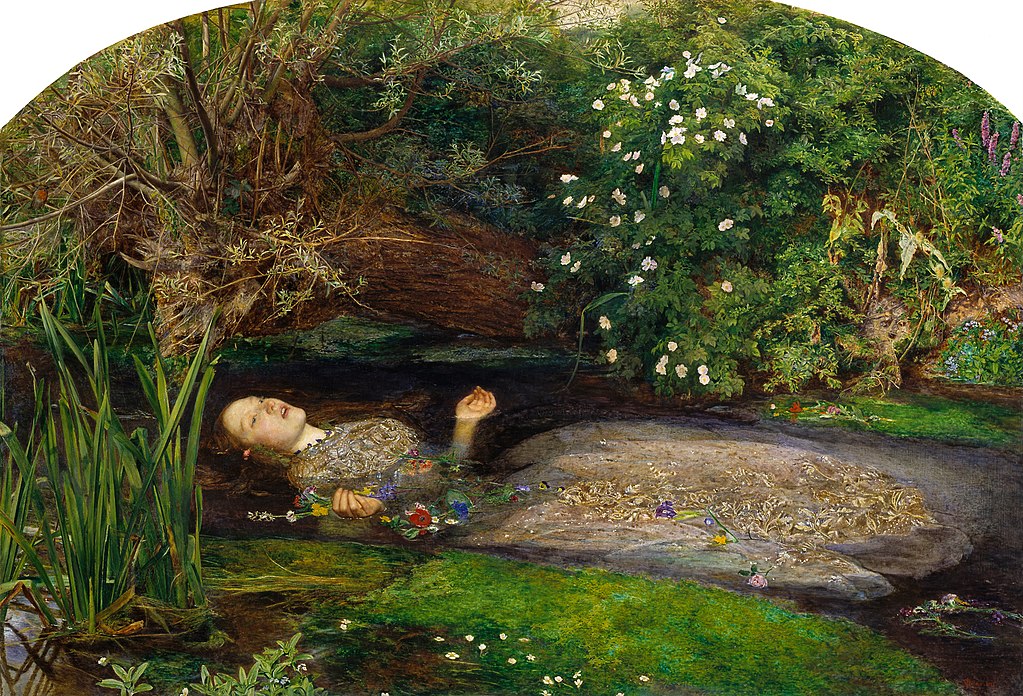
Ophelia, John Everett Millais

It's really astounding how many tragic heroines die by water. You'd think there was a handbook or something. Elaine, Ophelia, Hero, Helle - their deaths are all intimately associated with water. Helle's is particularly egregious, as the only purpose she serves in her entire story is to fall off the Ram with the Golden Fleece while he's flying over an ocean. Her brother, also riding the Ram, survives to found a royal line, but his sister just drops into the sea like someone cued her. She exists to drown. I smell a thematic necessity.

The Lady of Shalott, John William Waterhouse
It's fairly obvious at first glance why water, of all four traditional elements, is so closely identified with women. Shakespeare spells it out when Laertes mourns his sister. "Too much of water hast thou, poor Ophelia," he chokes out upon hearing of her death, "and therefore I forbid my tears." Women cry; tears are water; water is a woman's element. That makes it especially appropriate for heroines foiled in love, like Ophelia and Elaine; death by water is as good as a signed confession of love. "I drowned in the tears I shed for my lover." The Lady of Shalott dispenses even with Elaine's farewell letter; she only needs to drift down to Camelot on the river for everyone to understand that she has died for love. The symbolism of a woman in water is universal.

Hero, William Henry Rinehart
And then there's the nature of these women's characters. Water-deaths are generally performed by women who lack control of their lives. Ophelia is hounded from pillar to post by father, brother, lover and king, until her suicide becomes her only act of agency in the entire play. Hero is first aggressively wooed by Leander, then sits in her tower and lights a lamp and waits for him to swim to shore. The several Elaines in Arthurian legend make it murky which, precisely, is the one who dies for love of Lancelot, but in some versions she's not even the spunky rapist who gives birth to Galahad; in these, she tends his wound, gets summarily rejected, pines for him, and expires right after demurely stage-managing her own death to give it the proper emotional punch. And the Lady of Shalott (who I differentiate from all the zillion Elaines because, after all, Tennyson never names her, and "Shalott" is not "Astolat") is the saddest of them all, locked in her tower by the whispered threat of a curse, and doomed to death in the very moment she truly experiences life. These are women more acted upon than acting, for whom the cool calm of a watery death seems fitting.

The Death of Dido, Peter Paul Rubens
Compare them to, say, Dido, another suicide for love. But she dies by fire, and therein lies all the difference. Dido is fire; she's passionate, headstrong, determined, and impulsive. She's not the kind of woman who could float from Carthage to Rome with a passive-aggressive scroll of farewell in her languid dead hands. There is nothing passive about her. When she goes out, she makes damn sure that everyone in the vicinity knows about it. She even goes the extra mile and stabs herself on her own funeral pyre, proving her courage and her recklessness - and starting the bitter feud of Rome and Carthage at the same time. All that makes her far more intimidating than an Elaine or an Ophelia. Dido, the suicide by fire, is a dangerous femme fatale. In comparison, the other tragic heroines are far easier to swallow. They don't wreak havoc; they don't die in a grand operatic manner; they have the decency to shuffle off quietly and modestly, without causing too much fuss and drama for their menfolk. Water is acceptable; fire is, well, fire. And sensible women, even tragic heroines, don't play with fire.

Ophelia, Fernando Vazquez
But, as always, there's more to the story. Water isn't just smooth and serene. Its depths are invisible and ominous; the calm surface covers the roiling underneath. In the same way that fire provides a key to Dido's character, water tells us everything we need to know about what's really going on in the heads of the drowned heroines. These aren't emo girls who feel the need to proclaim their heartbreak at the top of their lungs. They keep everything inside, undercover, out of sight - but it doesn't mean it's not there. Sometimes it breaks free, as in Ophelia's madness; sometimes it provides a poignant emphasis to the heroine's tragic fate, like the Lady of Shalott "singing in her song" as she dies. And sometimes it drives a quiet, secretive girl like Hero to the drastic act of flinging herself out of her tower.

The water suicides make it too easy for us to take them, as we take their element, at surface value. Drama queens like Dido get all the attention, while the Ophelias and Elaines sit quietly by, holding their emotions in. But those emotions are still there. They ruffle the surface. And they offer some answers to the mysteries of these heroines.

Thursday, February 9, 2012

Three's a Crowd, Four is Chaos

Love triangles are one of the oldest tricks in the book. The drama of choice never gets old, especially if the characters in a triangle are all sympathetic and compelling. If you need to raise the emotional stakes, nothing does it faster than cornering the protagonist between two love interests and watching things go crazy.

But you know what's even better than a love triangle? A love quadrangle. At least that's what Shakespeare thought, and who am I to argue with him?

Shakespeare never bothered with three lovers when he could have four. In context, it makes perfect sense: his audience would be frustrated if the spurned lover just wandered offstage at the end. But this profusion of lovers and the promise of a happy ending does something very weird to the tension of a love triangle. Gone is the real potential for heartbreak and loss. Instead of waiting with bated breath to see who's chosen and who's rejected, we wait only for the revelation that will sort out the couples as they're clearly supposed to be.

A Midsummer Night's Dream, Jeff L. Davis
Take A Midsummer Night's Dream, arguably the most famous love quadrangle Shakespeare ever wrote. Even before the love juice enters the picture, it's very clear how things should be for maximum harmony. Lysander and Hermia are in love; Demetrius once loved Helena, and should really just man up and love her again so everyone can relax. Lysander even spells it out in the first scene of the play. Shakespeare goes out of his way to engage audience sympathy toward the single happy couple and (possibly) the lovelorn Helena. From that point on, we know how this will end.

The complications of the love juice are far more horrifying than we ever quite register, watching the play. Three innocents - Titania, Lysander, and Demetrius - are all brainwashed for spite or for the fun of playing God. At its worst point, the enraged men chase each other through the forest, intent on murdering their rival for a girl who's terrified by them both. On its surface, this is the stuff of horror movies. But it's treated as hilarious in the play, and in the context of the happy ending we know will come. So we laugh, and we accept as "happy" the fact that Demetrius is still brainwashed at the end of the play. Why is it a good thing that his will isn't his own indefinitely, or that Helena winds up married to a man who, in his right mind, doesn't want her? Because that's the way it's supposed to be. Don't think too hard about it; this is how we wanted it to end, right? Hermia and Lysander are happy again, and we liked them. Helena's got what she wanted (although her reasons for wanting Demetrius remain rather obscure). Friendship is restored, marriages are celebrated, and no one's fighting anymore. Just like we knew would happen.

I love Midsummer. But if you think about it for even a minute or two, it's actually horrifying.

Luckily, Twelfth Night isn't so scary. Shakespeare makes it even easier for us in this one.

Twelfth Night, Fine Line Features
One of these men is a girl. It's all okay.

No matter how much chemistry Viola has with Olivia (and let's be honest, unless your Orsino is ridiculously talented, she's going to have more chemistry with Olivia than with Orsino), it's obvious how this goes. Girl with boy; boy with girl. Because Viola's male masquerade never actually harms anyone, it's a lot easier to laugh at her misadventures. And the play itself is far more self-aware than Midsummer, actually addressing the issues it raises of gender and sexuality. Viola is assertive and in control whether she's in pants or a skirt; Sebastian, on the other hand, is a passive nonentity who, faced with a beautiful stranger hot to marry him, just shrugs and goes with it. It's very clear that the take-charge women will call the shots in their marriages, and the men obviously enjoy being ordered around.

Besides, unlike the lovers of Midsummer, these four are unique, individualized, and sympathetic characters. While the Midsummer lovers do nothing but squabble, the Twelfth Night leads get to know each other, share compelling backstories, and actively engage in running their own damn lives. Even Orsino becomes suddenly impressive in the last scene, when jealousy and his conflicted feelings for his pretty page-boy remind us all why he's someone Antonio fears. These characters are real people, and their depth puts the Midsummer lovers to shame.

Arguably, the only Shakespearean love quadrangle involving real tension is also his worst. The Two Gentlemen of Verona gives us a naive schoolboy, a selfish backstabber, a stalker
Valentine Rescuing Silvia from Proteus, William Holman Hunt
girlfriend, and an ice queen, and demands that we care about them. Valentine's gumption is undercut by his total obliviousness to his best friend's upcoming betrayal, as is his devotion to Silvia by his instant readiness to surrender her to her potential rapist. There is nothing admirable about Proteus, as false a friend as he is a lover. Julia is a classic spunky cross-dressing heroine, but deeply problematic since, while she has trouble telling Proteus to his face that she loves him, she sees nothing wrong with disguising herself to spy on him. And Silvia shows guts in defying her father and spurning Proteus, but that courage disappears when it's not plot-convenient, most notably when she's captured by bandits and threatened with rape by Proteus.

The "happy ending" here is as inevitable as ever: Valentine with Silvia, Proteus with Julia. But in this play, you could almost wish for some brainwashing love juice to make it at all palatable. Silvia marries the man she loves, knowing that he cares more about his treacherous friend's happiness than about her own. Proteus settles for second best, having made his future wife privy to his schemes to supplant her. Valentine is as naive as ever, forgiving Proteus with astonishing ease and expecting his life with Silvia to be sunshine and roses. Julia's faith in her fiance is shattered. The tension comes from the escalation of complications, from the way events tangle together to make a reconciliation seem almost impossible. And the falling action is so short and rushed that the ending is deeply unsatisfying, and not very happy.

The underlying problem of the love quadrangle is characterization. Even in triangles, with one less character to manage, the rejected lover is frequently underused in comparison to his or her rival. In Shakespearean quadrangles, there simply isn't enough time to establish all four as fascinating individuals from the get-go. Twelfth Night, by far the most successful, gives Sebastian short shrift and has to shoehorn in a spotlight moment for Orsino. In Midsummer, where the lovers' plot is one of three (and not even the most interesting), it's a miracle that they have as much depth as they do. And even though the love plot is the focus of Two Gentlemen, the lovers get buried in the side characters, subplots, and contrivances, as well as falling victim to the main pitfall of early Shakespeare: the play is more ambitious than skillful. Mid-career Shakespeare would have made a masterpiece of a story about betrayed friendships and forsworn love; in those very early days, he was still learning craft and structure.

A fourth lover is a security blanket. His or her very presence assures us that nothing will be so very catastrophic. No hearts will be irreparably broken; things will work out just like they're meant to; everyone will be suitably happy at the end. It leeches out all the tension that makes a love conflict one of those eternal plots. And it's very much to Shakespeare's credit that he managed to make such a reassuring trope as involving as he did.