Showing posts with label arthurian. Show all posts

Thursday, October 4, 2012

Revisiting Lancelot

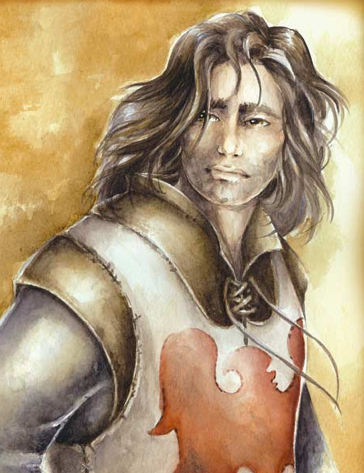
Sir Lancelot, Melissa A. Benson
Is it just me, or is Lancelot kind of boring?

Because really, you can only hear "best knight in the world" so many times before you get sick of both the phrase and the person it describes. From his intro to his elegantly repenting death, Lancelot is so perfect it's disgusting. He usurps the stories the second he appears; his arrival at Camelot signals the transition from "exploits of Arthur the warrior king" to "loosely connected vignettes mostly centering on this new French guy." There's no enemy who can face him, and no woman who can avoid falling head over heels the second she sees his exquisite yet manly face. He does exactly one thing wrong in his entire life, and even that had a certain inevitability to it: of course the world's most beautiful woman is going to fall for the best knight.

It's even written into the legends that Lancelot nauseates his fellow knights, who understandably don't get the joke the seventeenth time Monsieur Perfect knocks them out of their saddles. (While in disguise. And then rides away like tournaments are beneath him, when he obviously cares enough to joust in them.) Let's not forget how easy it was for Mordred to gather a band of disaffected knights to surprise him in Guinevere's chamber. Dude did not have a huge fan club.

So here's the thing. If we accept that it's very easy to get bored with Lancelot, the question that never gets asked is: why?

Sort of redundant, yes? Didn't I just answer it?

The Sword of Lancelot, Howard David Johnson
Well, yes and no. Take a step back from the stories. Look at them as plot alone. Lancelot is incredible. Remember what I said a few paragraphs above about how no enemy can face him? No enemy can face him. He goes up against knights who make careers of killing for fun, and he routinely destroys them. He does unspeakable things to ideas like "hopeless situation" and "no way out." When the woman he loves is in danger, he morphs into this amazing cross between James Bond and Superman, traveling incognito, busting up everything but his beloved during the rescue, and fighting the abductor with one hand tied behind his back because honor demands it. And he still splits this guy's head open. There is a reason this man is described as the best knight in the world. And it is because he is the best knight in the world.

One could argue that if it weren't for everyone else's insistence on his perfection, Lancelot would be seen not as irreparably fallen and kind of bland, but as the badass to end all badasses. I'd bet on him versus anyone. Batman? Please. Darth Vader? Don't make me laugh. Lancelot could take out Jaws if he wanted to. Without even using a boat.

Gawain and the Green Knight, David Hitchcock
Look at Gawain, another badass from the same cycle, and another owner of the "best in show" title (before Lancelot came along, that is). No sissy perfection for Gawain. He runs headlong into danger, carried away by his impulses, and he too wins more than should be humanly possible. But he (and his authors) aren't nearly as obsessed with his perfection as Lancelot. Sure, "Sir Gawain and the Green Knight" takes valuable time out of the quest shenanigans to explain why his pentangle shield is the most sacred thing ever, but it's really just ironic foreshadowing of Gawain's ultimate failure. He carries the perfect shield, but the knight it guards is only human.

Sound familiar? Perfect knight, fatal weakness, inevitable fall... It's the same story as Lancelot's ill-fated romance with Guinevere. On the outside, he is all that a knight should be; inside, he knows himself to be unworthy.

The difference between them, though, is that Gawain moves on. Humiliated and angry with himself, he tells all of Camelot about his disgrace. But Arthur, demonstrating exactly why he's awesome, gently reminds Gawain of his many accomplishments over the course of the quest, not least of which is the fact that the Green Knight honored him enough to leave him alive. Arthur takes it a step further by declaring that Gawain's green garter, until now a badge of shame, will be regarded by all as a symbol of Gawain's honor and courage in revealing his own weakness.

For obvious reasons, Lancelot cannot do the same. But that's a cop-out, because of course Arthur isn't stupid and already knows about Guinevere. Gawain's declaration allows him to get his failure off his chest, and in fact helps him reclaim the honor he thought he had lost; Lancelot's unwillingness to jeopardize that very same appearance of honor dooms him to cling to his sin. With no expiation, it festers, becoming the central facet of his character, while Gawain is able to grow beyond his misdeed.

So in addition to being the biggest badass at the Round Table, Lancelot's also got the most emotional turmoil of anyone (except maybe Arthur). Constantly aware of the hypocrisy on which his life is built, hating himself but loving Guinevere more, he has the most fascinating inner life of all the knights. He is a man desperate for perfection who can't help clinging to his one flaw. And he knows it the whole time. He is never allowed a moment to forget the contradiction of himself. He wrestles with it every single day, and always comes back with the same answer: he is not strong enough to reject what is at once the best and worst thing in his life.

He's not just a badass. He's a relatable badass.

Lancelot of the Lake, Delphine Gache
Everyone knows about the struggle to succeed; everyone understands the unexpected roadblocks that get in the way; everyone knows how bitter failure tastes. Lancelot's story is the story of every time we couldn't make something better. He is universal and human like no other character in the entire cycle.

I think it's time we reclaimed Lancelot. It's not going to be easy; his character forms around the very thing that holds him back. But we can definitely start celebrating his feats of arms as the ridiculously awesome career that they are. We can see the good as well as the sinful in his love for Guinevere; it's hard to do justice to the man when we keep dismissing and belittling the passion for which he sacrificed his soul. And instead of complaining about how boring he is, we - and I include myself here - can instead start asking why, for hundreds and hundreds of years, we've kept coming back to his story and finding things in it that touch our hearts.

Tuesday, September 11, 2012

Three to Tango

The Triple Goddess, Briar Mythology
The Triple Goddess is one of those fantastic myths you only learn about in your teens, once you graduate from Myths 101 and move on to the more interesting courses. Between them, the Maiden, Mother and Crone offer a fascinating view of the divine female at any and all stages of life, not just the shrink-wrapped virginity so beloved of fairy tales. The idea that divinity doesn't hinge on youth and beauty was a fantastic paradigm shift for thirteen-year-old Liz, who began recognizing triple goddesses when she saw them, and even wondering if the Holy Trinity weren't another triple goddess, only male.

Of course, thirteen-year-old Liz also fell squarely into the trap that is the triple goddess. With three different roles needing to be cast, it's very easy to forget that the roles themselves are much less than the sum of their parts. Taken as a tripartite whole, the triple goddess presents an illuminating view of womanhood, seeing each phase as worthy of honor. Split the triple goddess into her components and you're right back where you started: with a set of simplistic, easily categorized female roles.

Take my favorite Greek triple goddess, best known as Persephone. "Persephone?" you say. "That's one goddess." Well, yes, as we know her today. But her story is a fertility myth, perfect for a triple goddess given that the story itself is about change. Her title as maiden abductee and goddess of spring is Kore, which translates quite literally to "the maiden"; as the heartless queen of the underworld, she is Persephone; as someone who has harnessed the power of life and of death, she is Hecate (herself often depicted as a triple goddess). And to complicate things even more, Robert Graves suggests that the name "Demeter" is the one given to all three aspects of the goddess when combined, which - admit it - explains Demeter's nurturing personality and purview as well as her obsessive pursuit and reluctance to share her adult daughter. (By the way, Tanith Lee's brilliant novel White as Snow gets a huge amount of its power from exploring the parallels between the Demeter-Persephone myth and the tale of Snow White. Check it out, it's phenomenal.)

On their own, each aspect of the goddess is fairly straightforward: Persephone is the abducted innocent, Demeter the vengeful mother, Hecate the mysterious witch, and poor Kore an insignificant minor deity. Put them all together and the implications are dizzying. Not only does one person pass through every state of being, there's also an aspect of her character that allows her to be all of them at once. In essence, the triple goddess represents character development, also known as having lived a life.

In contrast, the Morrigan, often cited as a classic triple goddess, is practically a handbook for how to get it wrong. For one thing, it's never been clear whether or not she is actually a triple goddess, or one member of a triad, or just a standalone war goddess doing her thing who gets saddled with a bunch of warlike girl sidekicks. For another, the three goddesses who make up the triple-goddess Morrigan - Macha, Badb, and Nemain - are all aggressive war goddesses. Not much room for character development if they all handle the same thing. The Morrigan also shares a close affinity with animals; Badb can take the shape of a raven, and Macha is deeply identified with horses. A triple goddess's very nature means that she already has other potential forms to shift into; Kore and Demeter don't have familiars as the Morrigan does, and while some forms of Hecate have three animal heads, she herself doesn't turn into an animal. The confusion and the lack of variation makes the Morrigan even more troubling as a triple goddess. Unlike the Demeter-goddess whose three faces reveal growth and change, the Morrigan presents the same image no matter where she turns.

The Death of King Arthur, Katharine Cameron
Even in a highly Christianized story, the triple goddess persists. It's impossible not to recognize her in the three queens whose barge takes Arthur to Avalon after the fatal battle of Camlann; it's fascinating that Morgan Le Fay is one of those queens (although it's never clear what aspect she represents, my money's on Crone). Heather Dale's song "Three Queens" changes the identity of the other two - traditionally the Queen of Northgalis and the Queen of the Waste Lands - to Igraine and Guinevere, presenting Arthur with the great female triad of his life at the moment of his death. That makes the designation of each aspect obvious: Guinevere as Maiden, Igraine as Mother, Morgan as Crone.

The Masque of the Four Seasons, Walter Crane
And it poignantly points up the ways in which these three women, each essential to the legend of Arthur, fall short of becoming "complete." Guinevere is the eternal Maiden, beautiful regardless of the passing years, constantly abducted and in need of rescue, until her whiplash-inducing change at the very end of the cycle, becoming a nun as an act of penance and transitioning straight into the Crone without having borne the son who would have spared Arthur the necessity of Mordred. Igraine's role as Mother defines her entire role in the cycle; her brief moment as Maiden is problematic, both because she's already married when Uther falls in lust with her, and because that leads directly to her husband's death and her own rape. Once she's given birth to Arthur, the story has no more need of her; she never gets to evolve into the Crone. And Morgan, identified with the Crone through her magic (like Hecate) and with the Mother through her murderous son, never gets a chance to play the Maiden. Her story-imposed role as villainess cannot allow her a time of beauty and growth. Seen in that light, these pivotal heroines are as tragic as Arthur, and more deeply flawed; the exploitation of those flaws is what both creates and brings down Camelot. Even an imperfect triple goddess is illuminating.

Triple Goddess, Susan Seddon Boulet
But the Arthurian women have an advantage that Persephone or Macha don't; they're highly individualized characters, quite outside their triad. For the others, their greatest moment of depth comes as a facet of the triple goddess; it grants them a development not given to them in their own stories.

Maybe that's why we have triple goddesses in the first place: to grow characters given short shrift on their own. And maybe that's why already-developed characters don't neatly fit the archetype. It's a very strange kind of growth that sets up barriers and prerequisites. But the presence of a triple goddess changes the way we look at the divine female. Problematic though she may be, ultimately the triple goddess does enhance our perspectives, both on the characters and on what it could mean to be female.

Saturday, July 21, 2012

Queen of Hearts

Legends love problematic queens. Semiramis, Helen of Troy, the endless range of evil stepmothers - their ranks are some of the largest out there. You can see why: the dramatic potential of a woman who stands for an entire country and doesn't do her job by it is fantastic. On one hand, the queen is a powerful symbol; on the other, she's also an imperfect person. And for my money, no problematic queen is more interesting than Guinevere.

The Accolade, Edmund Blair Leighton
For one thing, she embodies that dramatic potential better than anyone else. The other problematic queens really aren't very good at the queen thing. Helen may look great on Menelaus' arm at public festivals, but she also openly and drastically shucks her duty. Semiramis drags Babylon into a war because a hot king turned her down. The jealous stepmother of "The Six Swans" robs her country of every single one of its heirs, just because they're not her kids. Not only are these women troubling, they can't even do their actual job properly.

Not Guinevere. Regardless of what she does behind Arthur's back, she is acknowledged in every version as a paragon among queens for her performance of her duties. She does the arm candy thing at every tournament and Pentecost feast Arthur throws. She hosts Maying parties and leads court excursions. She even (in an ironically Anglo-Saxon move, given who the historical Arthur's enemies were) offers the cup to his knights when they gather. (We'll ignore that one time the cup was poisoned and she was accused of murder. That's not the point.) Guinevere knows what none of the other queens do: her title is a role. She has lines to memorize and marks to hit, and she nails them all, every single time. Even the writers who don't like her (ahem, Tennyson) freely concede that publicly she is everything and more that a queen should be.

Sir Launcelot and the Queen Talked Sadly Together,
Arthur Dixon
Her failures, unlike her fellows', are private and behind the scenes. And also incredibly, heartbreakingly human. It's hard to forgive her for her betrayal of Arthur, but it's also hard to hate her just because she fell in love. And it's not as if (like Helen, say) she jumped headlong into Lancelot's arms. There are versions I've read where their love remains unconsummated, and even unspoken, up through the Grail Quest. Again: this is a woman who knows her duty. She bottles up her passion, confides in no one, and goes the hell on with her life, her job, and her marriage, as best she can and as long as she can. There's no outside divine influence, no heedless snap decision, not even any base motives. She just loves a man she must not love, and she fights it as hard as she can.

But not hard enough. Guinevere is a problematic queen for a reason.

When at last she begins her affair with Lancelot, writer after writer leaps on those problems. The perfect queen who betrays her duty, her husband, and her kingdom presents a stunning piece of hypocrisy. It doesn't help that Guinevere is actually a crucial piece of the lasting legend of Camelot. Arthur the lawgiver creates a kingdom, but it's Guinevere who brings civilization. Arthur only gets the Round Table because it's part of his wife's dowry. Without Guinevere, Camelot would lack its most potent symbol, as well as much of its courtly appeal and chivalric code. So for one of the true backbones of the realm to break faith with its highest aspirations is an act that undermines not only Guinevere personally, but the entire kingdom she represents.

Lancelot and Guinevere, Michael Manomivibul
And Guinevere's character becomes the mirror for that hypocrisy. From the wise and gracious hostess handing out elegant atonement to young Gawain at her wedding feast, she becomes a shrew of the first order, constantly doubting and questioning Lancelot's love. She can never just talk things out like a normal person; instead she picks fights, deliberately choosing her words to wound. Only honest people make clean breasts of their problems; Guinevere's deception bars her emotionally from taking the straightforward and more honorable road. Worse, she sometimes engages in petty jealousy, in a way highly uncharacteristic of the charmer and politician she would have to be in order to foster harmony and civilization.

In one sense, of course she can't be sensible and thoughtful; she is too symbolic a figure not to be identified first and foremost with her position, and her betrayal is too great not to exploit symbolically in literature. But the transformation of Guinevere from angel to harridan is also much too simple. If she's so obnoxious, why did Arthur fall for her? Why does her court mostly like her? There's got to be something else going on, something not symbolic but human.

La Belle Iseult (also called
Queen Guinevere), William Morris
Enter perhaps the oddest knight in shining armor ever: William Morris.*

A would-be painter and a revolutionary craftsman, Morris wrote the first work to present Guinevere not as a symbol of a decaying realm built on a dream and a lie, but as a human woman caught between passion and duty. The Defence of Guenevere imagines her at her trial before Arthur's knights, speaking on her own behalf with eloquence, dignity, and full awareness of herself. Brilliantly, her "defence" rests on that very thing nearly all earlier Arthurian chronicles deny her: total emotional honesty. Having at last found love, she demands to know if she "must...give up forever...that which I deemed would ever round me move, glorifying all things; for a little word, scarce ever meant at all, must I now prove stone-cold for ever?" She describes her agony of conscience, the anguish of love, the delight at its fulfillment and the shame she feels at that delight. She is, at last, open and honest and entirely sympathetic.

Guinevere, Meredith Dillman
But even at her best, she can't win. Because despite her eloquence, and despite the real torment of her soul, she is still a woman both wronged and wronging. Guinevere's archetypal appeal and human fascination are both tied directly to her dual nature: perfection and destruction, love and betrayal, honor and shame. No matter how sympathetic and understandable her motives are, what draws us to her are the contradictions that break Camelot. She is the greatest problematic queen in all of legend: problematic because we understand her and cannot absolve her.

*(Morris, of course, had personal experience with a problematic woman torn between love and duty: his own wife, Jane, one of the great muses of Dante Gabriel Rossetti. It's not hard to see where Morris could have drawn from life; but it is moving that he, the cuckolded husband, can summon such vast sympathy for the adulterous wife.)

Saturday, May 12, 2012

Love Potion Number Nine

Ah, young love. You burn, you pine, you perish. A smile sends you soaring; a glare tumbles mountains around your head. You just have to feel for those two crazy kids, thrown together by their unruly hearts. Sometimes. After all, if the object of your affection doesn't return your
The Love Potion, Evelyn De Morgan
feelings, you can always brainwash them with a handy love spell! Those never backfire!

For all their ubiquity in myths, it is a rare story where the love spell actually works out all right. There's Cupid and Psyche, sort of; he scratches himself with the arrow of love, falls head over heels, and... abducts her, woos her while invisible, and has to abandon her to a torturous set of quests before they can be reunited. And that's the happy one.

It's much easier to find a love spell gone wrong. Sometimes it's played for laughs, as Shakespeare does in A Midsummer Night's Dream. Frequently it's the province of a villainous woman, a "false bride" seeking to blot out a man's memories of his beloved and claim him for herself. (There's a splendid Grimm story, Sweetheart Roland, in which the heroine's loss of her beloved is just one of the many trials she faces.) More often, however, a love spell leads to total disaster. And I'm not talking about Our Hero and Our Heroine not ending up together. I'm talking about the breaking of the world.

Aphrodite Leading Helen to Paris, Jack Pane
The most famous of these is, of course, Helen of Troy. The jury will probably always be out on whether or not Helen went with Paris willingly, but in the Iliad she has no doubt of the answer: she demands to know if she is to be sent hither and yon, crazed with desire, whenever Aphrodite has a new mortal favorite. Obviously this was a flawed love spell, since Helen's own wishes can still make themselves felt, but it's still highly potent. Helen does in the end sleep with Paris, and the direct outcome of Aphrodite's love spell is the destruction, not just of a city, but of an entire generation.

Helen is a particularly sad case because not only has she been brainwashed, she knows it. The gods can force mortals to do their bidding; Helen knows all too well that no matter how much she might want to go home to Sparta, she will never be able to fight off Aphrodite's mind control. The best she can do is complain about it, and even that arouses the wrath of a goddess who's notoriously vindictive when thwarted. There are plenty of love-spelled bridegrooms unaware that they're about to marry the wrong girl; Helen is fully conscious all the time of just how much she doesn't want what Aphrodite's love spell is forcing on her. Hell with brainwashing - this is torture.

Tristan and Isolde, Yoshitaka Amano
Later stories shift the blame away from the lovers. Tristan and Isolde drink a love potion unknowingly (again, the jury is still out on whether it really was an honest mistake, or whether Isolde's mother or maidservant thought that Isolde would be better paired with Tristan than with King Mark). It's just as unfair for them as it is for Helen; while their love is deeply felt, it's also created without their consent, and locks them into a fate as destructive as Troy's. For a long time they choose to deny their love, unlike Helen and Paris, for the sake of preserving the political alliance that Isolde's marriage creates. But all that that does is drive them to distraction and inflame Mark's suspicions. When they run away together, their guilty consciences send Isolde back to Mark and Tristan across the sea to Brittany, and ultimately into a marriage of convenience with a girl he never touches, who rightly becomes as suspicious as Mark. Conscience proves their undoing, since out of decency Tristan waits to seek Isolde's healing help until it's too late to save his life, and she dies of a broken heart when she arrives to find him dead. Their story is a tragedy where Helen and Paris's is not, primarily because they fight as hard as they can against a love that they know will doom them. But that knowledge gives them precisely zero help. The best you can do, apparently, is to live a tortured life of denial and hope that posterity thinks well of you.

Siegfried Meets Gutrune, Arthur Rackham
And that's only if your family is inclined to let it rest. Siegfried's wife Kriemhild enticed him away from Brunhilde with a love spell, but the ensuing love dodecahedron creates a situation where murder and mayhem are the only outcomes. Siegfried's friendship with Gunther, Kriemhild's brother, leads him to betray his initial (and real) love for Brunhilde by posing as Gunther in order to win her for his new brother-in-law; Brunhilde's outraged pride and rejected love make her arrange for Gunther to kill Siegfried, and then to throw herself on his funeral pyre; and Kriemhild, furious at her brother's treachery, has him slaughtered at the feast celebrating her second marriage and burns the great hall down around them all.

Brunnhilde on the Pyre, Arthur Rackham
The characters of the Nibelungenlied (or the Volsunga saga, whichever version you prefer) are neither heroic nor villainous. They do horrible things, but for reasons well within the code of their society. Kriemhild's terrible vengeance is something that her honor requires her to do; in the Volsunga saga, the gods decide that she did exactly the right thing and bring about a third (and apparently happy) marriage, this time to a Swedish king. Siegfried deserves more pity than condemnation; for most of the story, he operates under the brainwashing influence of the love spell, and can't even remember being in love with Brunhilde. As far as he knows, he's doing some iffy things in the service of his best friend and the woman he loves. Brunhilde, although vindictive as hell, also recognizes that she's gone too far (although arguably she's operating under the exact same rules as Kriemhild will later); her suicide reclaims for her a moment of true tragic dignity. Only Gunther comes off as a real lowlife, literally stabbing his best friend and brother-in-law in the back. The whole mess could have been avoided if the love spell had never entered the picture. Once it does, everyone involved is doomed. The rules of honor require them all to make the moves that will lead to their deaths.

Death of Tristan, Robert Engels
Which makes sense. Clearly we're uncomfortable with the idea that we can be brainwashed and never regain our true minds. But the horrific endings to so many love spell stories place the brunt of the fallout on the shoulders of the victims. Siegfried gets murdered; Tristan and Isolde both die; Helen sees herself become the byword for a faithless whore. Aphrodite never suffers for enchanting Helen. The queen of Ireland, who sends the love potion with Isolde, is punished not at all; nor is Kriemhild's mother, who puts the spell on Siegfried. In some "false bride" fairy tales, the villainous woman who tried to steal the bridegroom gets torn limb from limb by horses, or rolled down a hill in a barrel full of knives, or even just exiled or humiliated in front of the whole court. But in some (like Sweetheart Roland), there's again no punishment for the instigator of the mess.

The Death of Siegfried, Hermann Hendrich
It's incredibly unsatisfying to see relative innocents pay with their lives for the crime of another. But it reveals a realistic attitude towards life that legends and fairy tales (often unjustly) aren't seen as having. People escape justice all the time. Innocents suffer all the time. The punishment for making a mistake is often out of proportion to the mistake itself. These aren't giddy Disneyfied tales of happily-ever-after; these are tragedies of epic scope, designed to reveal dark truths about humanity and about life. Instead of spoon-feeding you a happy ending, the love spell stories and their awful endings force you to think about human nature: about love, about hate, about injustice.

It's heavy stuff. But it's what we have legends for. We tell those stories to remember what happens when we impose our will on someone else. And in telling them, hopefully we remember that that path rarely leads to dignity, or happiness, or anything we'd want for ourselves.

Tuesday, February 7, 2012

The Dark Side of the Moon

Fair warning: Today's the day wherein I crush all your youthful ideals.

Now that we've got that out of the way, let's talk about Camelot.

Arthur's Camelot, Alan Lee
The name itself is a universal shorthand for perfection, for a time of ideals, for the realization of a few impossible dreams. It's about as rose-colored as you can get. And for good reason: the whole point of having a legend like Camelot is to believe that things can be better, that justice can win over brute force, that one brief shining moment of good is worth all the suffering it takes to win.

So all things considered, we've done a really good job at forgetting that every single one of Camelot's turning points is rooted in betrayal (at best) and rape (at worst).

Take five minutes. Make a list. The moments where everything changes. I'll bet it includes:
- the conception of Arthur
- the sword in the stone
- the conception of Mordred
- Merlin and Nimue
- Galahad
- Lancelot and Guinevere's affair
- the death of Arthur

Let's go through it one thing at a time.

Arthur's very existence is due to betrayal and rape, depending on who tells the story. After fighting the Saxons back to the shores, Uther and his kingdom figure they can settle in for some well-deserved peace. Instead, Uther falls wildly in lust with Igraine, the wife of his most stalwart supporter in the war that just ended five seconds ago, and provokes a whole new war against Gorlois because the man gets touchy at the thought that the king wants to sleep with his wife. Ultimately, unable to prevail against Gorlois' forces, Uther resorts to magic and trickery: he has Merlin enchant him to look like Gorlois, so he can pass through the defenses of invincible Tintagel and sleep with Igraine. While wearing her husband's face.

I don't care how you interpret that. It's messed up. And it's wrong.

To be fair, interpretations vary wildly, mostly in how they deal with Igraine's reaction to this whole mess. Malory casts her as loyal wife to Gorlois, who in fact proposes the flight to Tintagel herself. Mary Stewart has a proud but lovesick Igraine conspire with Uther and Merlin to trap Gorlois. Marion Zimmer Bradley's Igraine loves Uther, but refuses to betray her husband (up until he betrays her, that is). On the whole, people shy away from the notion of rape. But in Malory's version, that's what Arthur's conception is. Uther intentionally misleads Igraine to trick her into sex, when she already refused consent to his face.

The once and future king is a child of rape. Put that in your pipe and smoke it.

The sword in the stone is far less drastic, but treachery is still involved. Young Arthur, in search of a sword for his forgetful foster brother Kay, turns to the unclaimed sword stuck randomly through a stone in the churchyard. He pulls it out as easy as blinking and gives it to Kay. Problem solved! Go Arthur, savior of the day!

Until Kay recognizes the sword and what it means, and decides that the best possible option is to lie.

Granted, Kay is not the nicest guy, and certainly not nominated for brother awards in this or any century. But this is low, even for him. He knows Arthur pulled out the sword. He knows exactly what that makes Arthur. And instead of being a man about it, accepting that his annoying younger brother might actually be the long-awaited king (who, by the way, is supposed to SAVE THE KINGDOM), Kay's first instinctive move is to grab the glory for himself. You can argue that Camelot owes its existence more to Sir Ector's ability to smell a lie than to Arthur's go-getting nature; young Arthur certainly gives the impression of wanting to please, and it's not hard to imagine that he'd back Kay's lie in hopes of impressing his brother.

Nigel Terry and Helen Mirren as Arthur and Morgana, Excalibur, Warner Bros.
We don't even need to discuss why the conception of Mordred is betrayal and rape, right? It doesn't matter if the treacherous sister is Morgause or Morgan; if she wore Guinevere's face to fool Arthur; if Arthur was young and raw when it happened, or if he was already king. Mordred's mother does the exact same thing to Arthur that Uther did to Igraine: deliberately lies and distorts events for the sake of her own agenda, regardless of Arthur's consent or input.

The Beguiling of Merlin, Edward Burne-Jones
Merlin and Nimue... yeah, I'm going to go ahead and skip the rape charge on that one. Merlin's consent is a weird issue here, since he knows from the start that he will fall for her and she will betray him, but he's an absurdly powerful magician: if he really wanted to avoid her, he would have. (Besides, I've seen versions where her final treachery comes by promising him sex if he'll just climb inside that tree for two seconds, in which case the rape question is a moot point.) Betrayal, on the other hand, is all over this. Merlin gives Nimue everything she asks for, teaching her all his most powerful magics, and in return she seals him alive inside a tree. (Or in a cave, as your preference may be. I like the tree, personally.) Despite the rather fantastic revisionist versions I've read over the years, this story has never really been about anything but betrayal. Even though Nimue takes her mentor's place at Arthur's right hand, and saves him as many times as Merlin had, you get the sense that she'd have to do it to make up for taking Merlin away.

Lancelot and Elaine, Henrietta Rae
Lancelot and Elaine's relationship is the most unhealthy in the whole damn mythos. Yes, that's a bold statement; yes, I stand by it completely. Elaine may be the first stalker fangirl on literary record. She willfully fails to realize that nursing Lancelot back to health does not entitle her to love-of-his-life status. She thrills to find that he wore her token to a tournament, and conveniently ignores the fact that he wore it (like a cad, I must admit) only to assist in fighting incognito. When he rejects her (again, not with the best grace), what's her gut impulse? Is it to get over him? Is it to find another love? Is it to plot bloody vengeance?

It's to force him to marry her by raping him.

Oh, yeah. Elaine-on-Lancelot action is the most straightforward case of rape in the stories. He doesn't want her; he doesn't like her; he's told her no multiple times. Sometimes she only uses magic to make herself look like Guinevere; sometimes she also roofies Lancelot. And then she just doesn't understand why he literally goes insane at the revelation of what's happened.

The irony of it all is that out of this appalling encounter is born Galahad, the perfect knight. But for Lancelot at least, the ends don't justify the means. He never returns to Elaine. He and Galahad have a nonexistant father-son relationship; Galahad saves Lancelot on the Grail Quest, but that's about it for bonding time. And it's hard not to imagine that Lancelot would be grateful that his unwanted son wasn't around after the Grail Quest to remind him of the absolute darkest chapter in his life.

Lancelot and Guinevere, Herbert Draper

Not to mention that Lancelot's got his own bit of betraying to do back home.

Again, no explanation needed. This might be the world's most famous love triangle. It's not supposed to happen, but it does, and the exploitation of Lancelot and Guinevere's affair destroys Camelot.

The Rescue of Guinevere, William Hatherell
The betrayal here is colossal: betrayal of a spouse, betrayal of a friend, betrayal of loyalty, betrayal of a lifetime of work, betrayal of a dream. I'm not saying that Lancelot and Guinevere are singlehandedly responsible for all this betrayal; a lot of it was done by Mordred and his cadre of jealous knights. But this was the fulcrum they used to move their world, and it worked so well because they didn't have to make anything up. They just had to enhance what was already there.

Which leads us to the most unkindest cut of all: Mordred's betrayal of Arthur.

How Mordred was Slain by Arthur, Arthur Rackham
To give Mordred his due, Arthur was an absentee dad who tried to have him killed at birth. But just destroying Arthur's kingdom, marriage, and closest friendship wasn't enough for Mordred; he had to go that extra mile and mess deeply with Arthur's head, winning his trust, appearing to support him, and then backstabbing him at the earliest opportunity. Arthur's last stand at Camlann is one of hopelessness. He's had everything stripped from him in a breathtakingly short amount of time, and all by the long-lost son he wanted to trust. To be honest, I tend to forgive him for the child-murder thing, if only because he suffers so much by the end that I feel like he's atoned and then some. Mordred, on the other hand... for his sheer cold-blooded viciousness, for his total dedication to making Arthur's life hell just because he can, Mordred can never suffer enough. (Yes, I'm biased. I love Arthur. Arthur the person does not get enough love.)

Could you argue that the incredibly depressing roots of the legend are the reason why its trappings are so bright and hopeful? Sure. All that agony and betrayal is ten times worse if it's pointless. If it's endured in the service of a higher ideal, that makes it a little easier to bear. And I don't think we'd still be telling these stories if their surrounding framework didn't provide more hope than they do on their own.

But it's still depressing. The heart of Camelot is very dark. And it makes the legend too simple if we forget that.

Thursday, January 19, 2012

The Best Knight in the World

Hi, Round Table. Nice to see you here.

King Arthur and the Knights of the Round Table, Michel Gantelet
Just the sight of it makes me happy. The equality of it all! The enlightenment! The awareness that being the best is less important than doing your best... except actually, not at all.

Despite the ideals of the Round Table, the legends forget about all that in short order. The King Arthur stories are crammed with applicants for the job of Best Knight Ever. Either Camelot was full of inferiority complexes, or the Round Table wasn't doing its job of promoting equality.

We begin with our starter kit, the knights who rallied behind Arthur back when he was a teenage sprog with a talent for freeing stuck swords. (Spoiler alert: none of these guys are The Best Knight in the World.) This quarrelsome lot provides the need for a Round Table in the first place; they won't shut up until assured that they're all equal to each other. The question of who's best is finally moot when Guinevere brings the Table with her dowry.

Sir Gawain and the Green Knight, John Howe
Along comes Gawain. Young, brave, impulsive, and nephew to the king. Maybe not so much stronger than more experienced knights, but was anyone else volunteering to get his head cut off by the Green Knight, or to marry the queen of ugly so he could save his king's life? Didn't think so. When Gawain comes back from the Green Chapel, pretty much everyone agrees that he deserves an extra portion of respect and honor.

So... he's the best, right?

Hold your horses, ladies and gentlemen and especially ladies.

Sir Lancelot, Melissa A. Benson
Lancelot wants a word. Lancelot is
easily the strongest of the
bunch. He could unhorse every knight at court twice and still have time for breakfast. He comes prepackaged with his own hype - a king's son, raised by the Lady of the Lake, his coming foretold by Merlin - and unlike many a Next Big Thing, lives up to and beyond it. He's a strong, sensitive stud who's so famous that he has to ride incognito in tournaments so he won't win by default.

So... he's the best, right?

Yeah, right. The name Guinevere mean anything to you?

The Temptation of Sir Percival,
Arthur Hacker
Besides, eventually Percival shows up, full of youthful naivete (also known as purity) and more good intentions than even he knows what to do with. Percival's a magnet for quests that only The Best Knight Ever can achieve, and mostly he achieves them. He never falls prey to sinful love, remaining either virginal or true to his first love for his whole life. Not to mention that in early versions of the Grail Quest, Percival is the knight who accomplishes it.

So... he's the best, right?

Sir Galahad, George Frederic Watts
And then there's Galahad. The only impure thing ever to happen to Galahad was the whole "conceived out of wedlock" business. There's a reason that his name is synonymous with "perfect knight." He surpasses his father's strength, young as he is. Few knights on the Grail Quest didn't need their butts saved by Galahad's intervention. The Siege Perilous was created for him alone. He gets a reprise of Arthur's sword-in-the-stone miracle within minutes of his arrival at Camelot. And he achieves the Grail, while even Percival has to sit on his slightly less pure hands and watch.

So... he's the best, right?

Oh, who even knows anymore? It seems like every time a new knight pops up on the scene, he's hailed as Today's Best Knight. Tristan gets this treatment once he tears himself away from Isolde and comes to Camelot. Bors gets it out of nowhere when Malory has to explain why a knight we've barely met is worthy to see the Grail. Gareth gets it briefly, after defeating four knights and Linette's taunting. And King Arthur gets the reverse version, with his personal reputation as a fighter taking distant second place to his law-giving fame.

Jousting Knights, c. 1445
It's a strange conundrum that a company famous for their equality should be so hung up on superiority. Because they are. They ooh and aah over each New Best Knight. Galahad only has to sit down for Bors to turn into Mr. Ollivander and declare that they all expect great things from him. Anyone who manages to unhorse one of the Big Four practically has a party thrown in their honor.

Could it be that the knights are just glad to see a dominating presence proved human? Sure. Obviously those guys are part of the legend; Mordred wouldn't have had supporters without them. And maybe that's the point. Even at the height of its glory, Camelot is only human. The knights want one person to be better than another. No one wants to say that Kay is as good as Lancelot. What they want to say is that they're better than Kay. Or Lionel, or Bedivere, or whoever they want to surpass. On one hand, it's proactive goal-setting; on the other hand, it turns one of the greatest ideals of the story into a vessel for lip service. And given that Camelot falls through human failing, I like the idea that that failing was there all along.